Teams Rooms in a panel, or Teams Rooms as a system
Both approaches are certified and both work. The choice comes down to the length of the table, who maintains it, and what happens in year three.
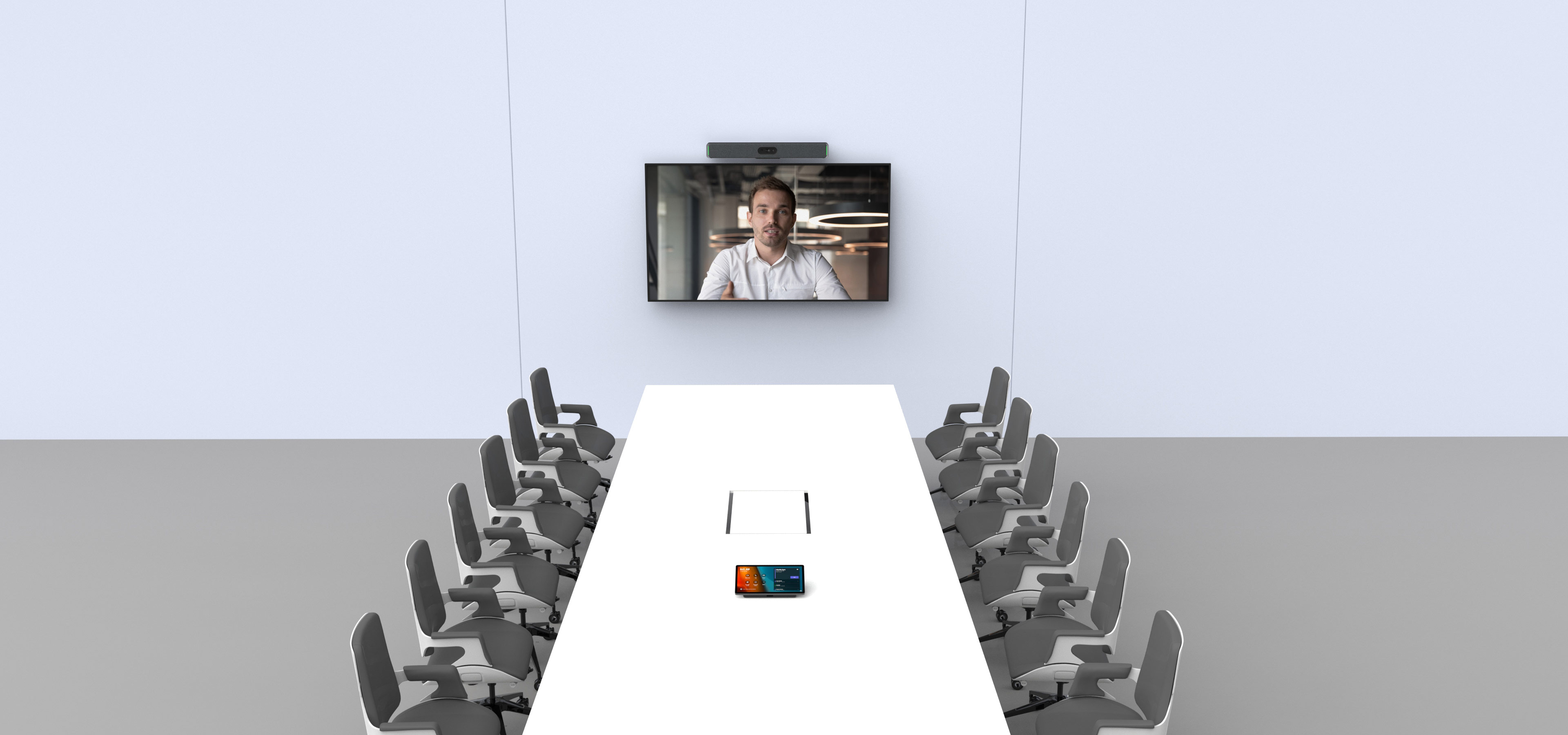
Microsoft Teams Rooms is a certification, not a product. A MAXHUB panel can carry it, and so can a QSC system built from separate parts. Both are legitimate. The question a specifier actually has to answer is which one the room will still be running well in three years.
Where a panel is the right answer
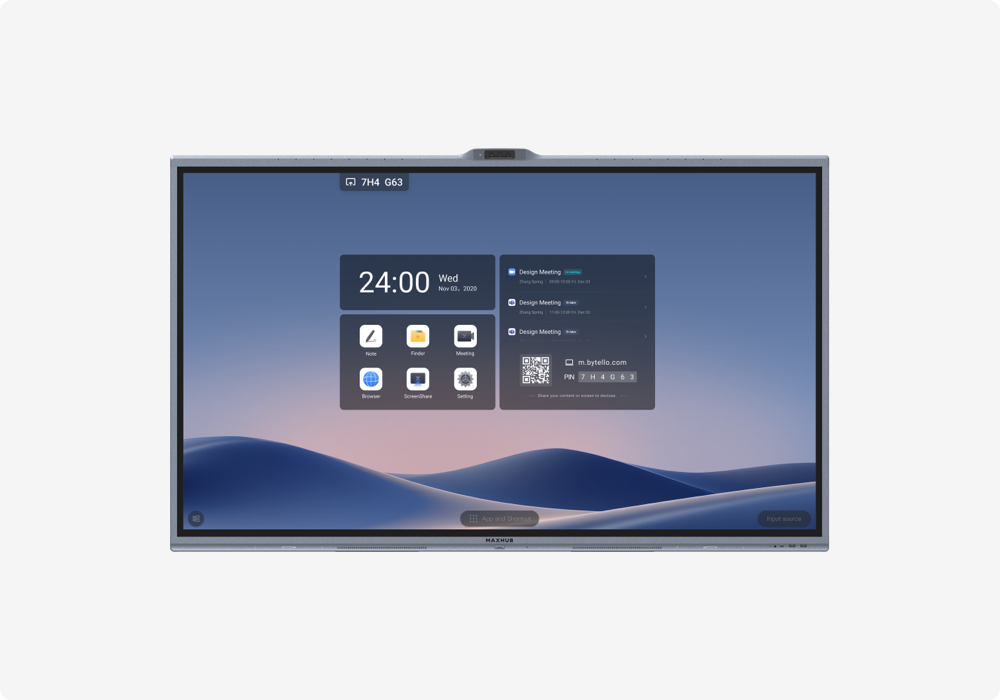
An all-in-one panel puts the camera, the microphones and the speakers behind the glass. One power feed, one network drop, one thing to mount. For a huddle room of two to six seats that is the whole design, and adding anything to it makes the room worse rather than better.
The XBoard V7 carries a 16-mic array with a 15-metre pickup and three 50MP cameras behind the glass. Where the furthest seat is three metres from the display, that sits comfortably inside the envelope and the room needs no processing underneath it.
Where a panel runs out
Three things break the all-in-one assumption, and they tend to arrive together.
The first is distance. A panel microphone is fixed at the front of the room. Past roughly four metres the far end of a boardroom table stops being picked up cleanly, and no amount of processing inside the panel changes where the microphone physically is.
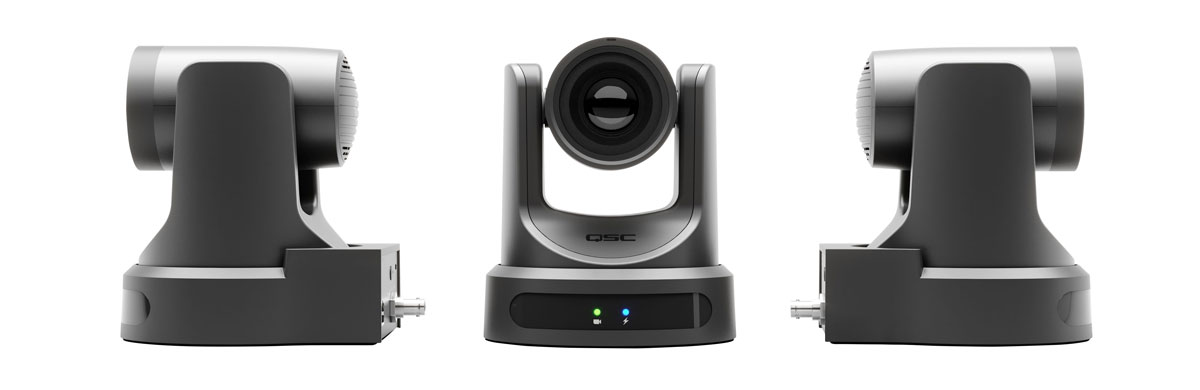
The second is the camera. An ePTZ camera crops a fixed sensor, so a face at the far end arrives with fewer pixels the further away it sits. A PTZ camera moves a real lens instead. The NC-20x60 gives 20x optical zoom across a 60-degree field, which is deliberately narrow: it is built to reach down a table rather than to cover a wide room.
The third is the room itself. A divisible training suite, or a floor of rooms that IT wants on one dashboard, needs logic that lives somewhere other than inside one display.
Side by side
| All-in-one panel | QSC system | |
|---|---|---|
| Seats | 2 to 6 | 10 to 22, or divisible |
| Microphones | In the panel, 8 m pickup | Ceiling array or steered table mic |
| Camera | ePTZ, fixed sensor cropped | PTZ, 12x or 20x optical |
| Audio out | In the panel | Network loudspeakers or amplifier and passive |
| Control | On the panel | Touch controller, one surface for the room |
| Fleet view | Panel fleet console | QSC Reflect, every device |
| Commissioning | Half a day | Programming and DSP tuning |
What a system costs you, and what it buys
A QSC room is more parts, and more parts means more to specify and commission. What it buys is that each part can be sized to the room instead of averaged across it.
It also changes the install. Network loudspeakers such as the NL-C4 take audio and power down a single Cat5e run, so the design has no amplifier and no speaker cabling. That removes rack space and a set of terminations, and it moves the constraint to the network switch, which now needs PoE+ Type 2 Class 4 ports and the power budget to match.
The cost does not vanish. It moves onto somebody else's budget line, and that is a conversation to have during design rather than at commissioning.
A rule that holds up
If every seat is within about four metres of the display and the room will never be divided, specify the panel and stop. If the table is longer than that, if the room splits, or if somebody has to answer for uptime across a floor, the processing is not an upsell. It is what makes the room work.
We specify across both lines and hand over one room either way. The honest answer for a six-seat huddle room is usually a panel on its own.
More room notes
What a ceiling loudspeaker really costs
The loudspeaker is the cheap part. The amplifier, the cabling and the rack space are the rest of it, and network speakers move that cost somewhere less obvious.
Pick the camera from the table, not the room
Field of view and optical zoom pull in opposite directions. Which one matters is decided by the shape of the table, not the size of the room.
Three ways to build a Teams Room, and who should pick which
Windows kit, Android appliance, or a USB bar and whatever laptop walks in. All three are certified. The right one is decided by who manages the room, not by the hardware.